
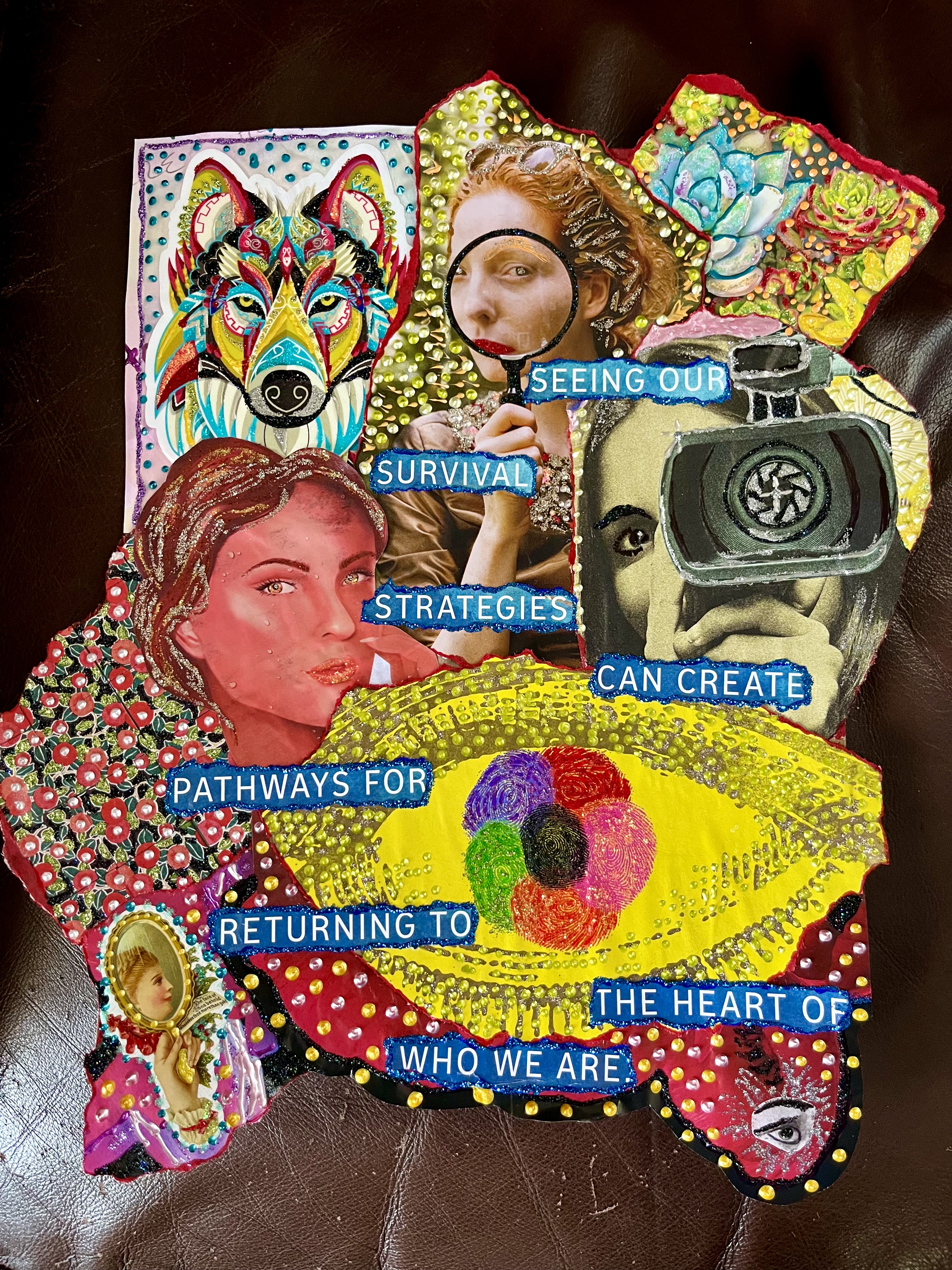
Something happens…that’s all it takes…just one thing…and game on…the ball is in motion…thoughts start formulating, jumping around in our heads like a pinball machine.
Personally, I’m a great story teller. I can weave a story that takes me from 0 to 100 in mere seconds and create a million scenarios (usually worst case) from just one thing that happens.
Unfortunately, these scenarios are rarely benign. They usually tend to be on the catastrophic side. Can you relate? Have you ever created the proverbial “mountain out of a molehill”?
I’ve been told and I’ve also read that our brains don’t like uncertainty or gaps in information. So, in the absence of a whole story, we fill in the blanks to create a sequence of events. Whether or not it’s accurate is another story. We can (and often do) take one piece of information and create a whole reality around it, throwing a lot of energy behind it too,I might add…
And that, my fellow humans, is where things can go wrong, very wrong…stories that invoke angst and, oftentimes, depict worst case scenarios. They’re, often, somewhat far from reality but possibly represent a survival strategy of sorts, connected to more primitive times…let’s plan for the worst so we can protect ourselves. Some might even call it contingency planning.
Within the context of emotional wellness, though, it’s an example of what is known as a cognitive distortion. We take a piece of information and twist and turn it into something it’s not, with the imagined end result being emotionally unsettling. And it’s so very common…we all do it at some point or another.
As I’ve become increasingly aware of my storytelling skills 🤓 and tendency to catastrophize, I’ve developed a heightened awareness of shifts in my level of physical comfort – breathing changes, increased muscle tension, racing thoughts and stomach discomfort to name just a few. Our bodies are wonderful first responders…they send us signals that something is brewing if we have our eyes open – literally and figuratively.
Be willing to take a look. If you see something say something – to yourself.
“Hey friend, I see that you’re weaving a story and it’s starting to affect you. Let’s slow down and unwind this.”
Ideally, we wouldn’t weave stories. But, if we do, how can we dispel thought distortions?
Some possibilities include asking ourselves:
-What are the facts that I have right now?
-What questions do I have?
-Where can I get additional accurate information?
-What are other potential outcomes that are more favorable? (positive imagery and counterbalancing)
-What self soothing tools can I use to manage my uncertainty?
-What healthy natural supports can I access?
This is NOT easy. However, it can be helpful over time. It takes practice – for all of us. So let’s slow down, take a look and adjust our lens to see the facts vs create scary stories.
 Through My Mind's Eye