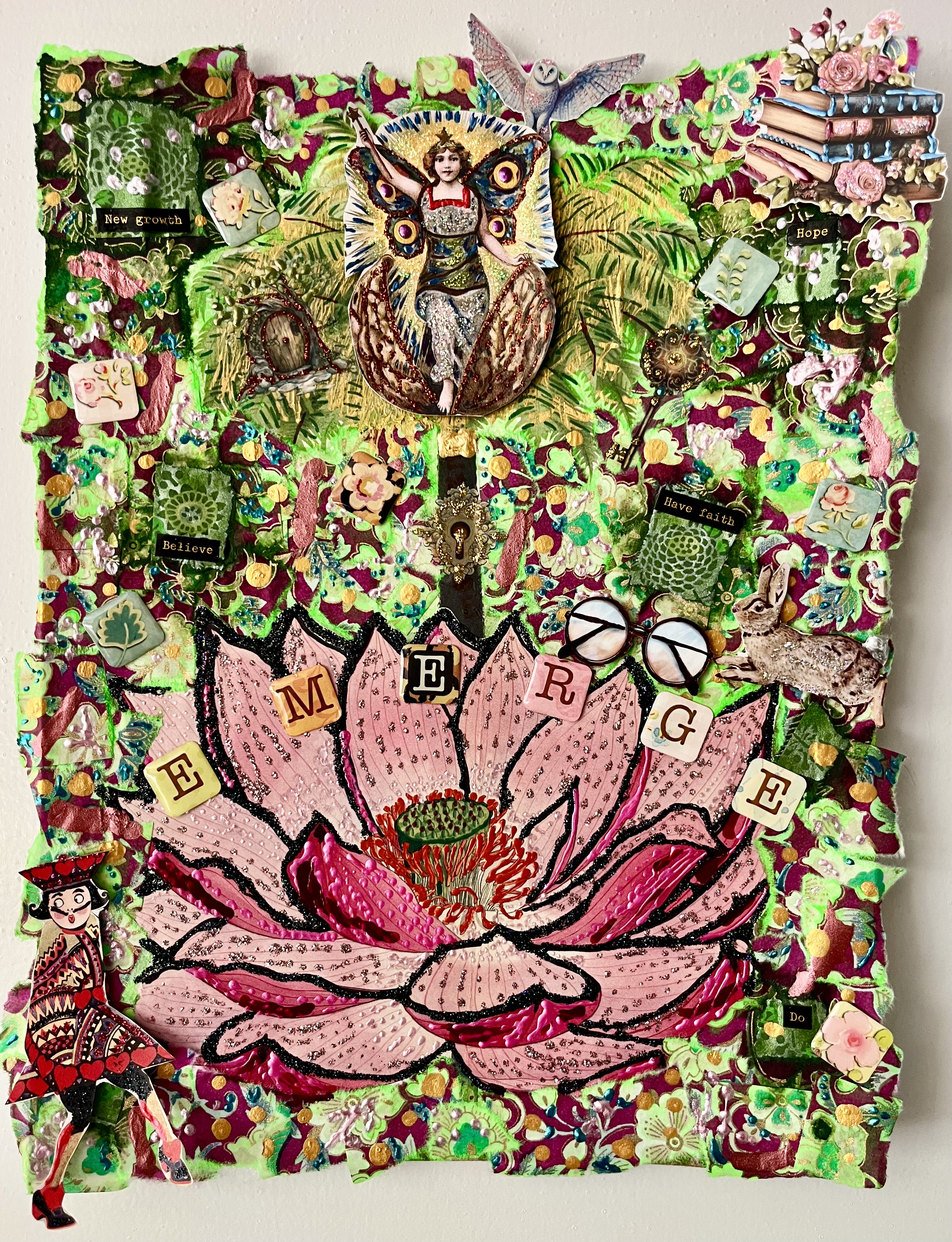
Thich Nhat Hanh said “No Mud No Lotus” to remind us that the path to enlightenment is strewn with suffering, the proverbial no pain no gain theory.
But, is there more that we can learn from how a lotus grows? Yes. I say that because I did some reading about the growth cycle of the lotus and I am fascinated:
-lotus seeds lay dormant in nutrient-rich mud during the winter
-as it gets warmer, sprouts grow upwards, through the water, pulling towards the light above the surface
-ultimately, large green leaves appear
-these leaves are water and dirt repellent (hydrophobic)
-this self-cleaning feature enables the lotus blossom to emerge and remain pristine…
-once the season is over, the bloom dries up and drops its seeds into the water/mud to begin the cycle again…
What stands out most for me is how the leaves repel dirt and water. They sit on the surface of the leaves but are not absorbed by them, thereby, making it possible for a beautiful, clean blossom to emerge. I absolutely love that.
So, what does that have to do with us?
It made me think about times when I’ve experienced difficult things and internalized (ie absorbed) the pain. I remember creating narratives about who I thought that I was (internalized) vs what I had experienced (externalized)…I made it about me (personalized) and it was hard to dispel that heaviness. At those times, I didn’t (yet) have a hydrophobic skill to repel the dirt and water, ie let it sit on the surface but not pierce my self-perception. Thankfully, I’ve developed that skill and it works (most of the time). Better said, it’s a work in progress…
Without doubt, the ability to acknowledge a painful experience without making it a perceived, personal flaw is a hard-earned skill. The flip side of that is, once internalized, it is much harder to dismantle a narrative. (not impossible but hard)
So, like with hydrophobic leaves:
-Can you allow things to sit on your surface vs absorb, internalize and personalize them?
-If so, how did you achieve this?
-If not, how might you remind yourself of the process that the lotus follows and mirror it?
PS For more art journaling reflections, my book Diary of a Curly Top, Everyday Reflections Through Art is available on Amazon at
 Through My Mind's Eye